
Over my years serving Pierce County homeowners, I’ve responded to countless emergency calls from panicked residents whose garage doors suddenly won’t open. Nine times out of ten, the culprit is either a broken spring or a broken cable. While both failures can leave you stranded with a door that won’t budge, knowing the difference between these two issues can help you communicate the problem clearly and understand what repairs you’re facing.
I’ve learned that most homeowners struggle to identify which component has failed. Today, I’m sharing the tell-tale signs of each problem so you can diagnose the issue yourself before calling for service.
What Are the Visual Differences Between Broken Springs and Broken Cables?
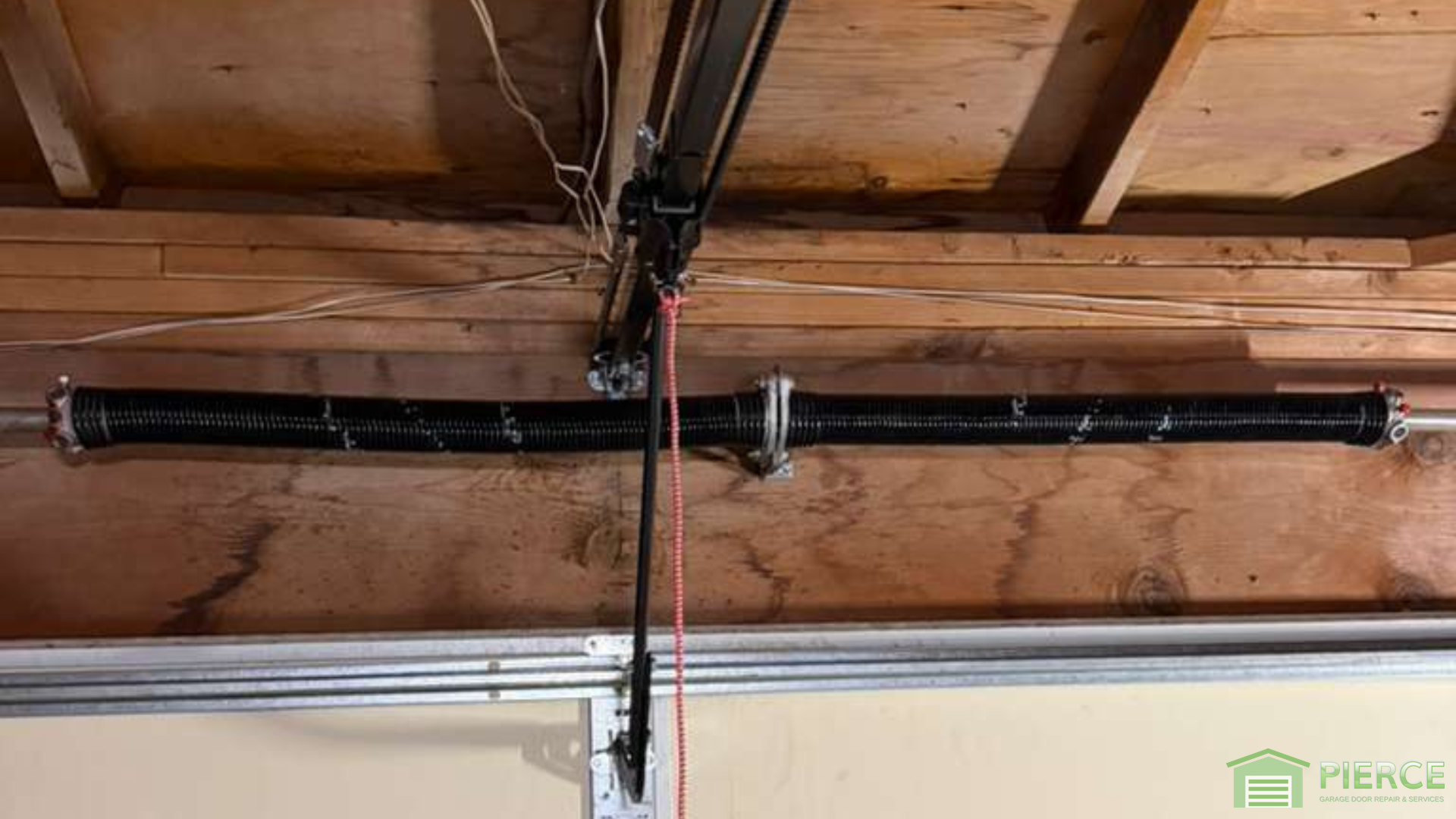
Broken springs are usually obvious once you know what to look for. The torsion spring, mounted above your garage door, will have a visible gap or separation in the coil when it breaks. You’ll often see this 2 to 3 inch gap right in the middle of the spring.
Broken cables present differently. These steel cables run along the sides of your door, and when one breaks, you’ll see it hanging loose or coiled on the ground near the door’s edge. Sometimes the cable is completely detached from its attachment point at the bottom roller bracket.
How Does Each Failure Affect Your Garage Door’s Behavior?
A broken spring typically causes your garage door to feel extremely heavy or refuse to open at all. If you have an automatic opener, it may struggle, make grinding noises, or stop after lifting the door just a few inches. The door often won’t stay up if you manage to manually lift it.
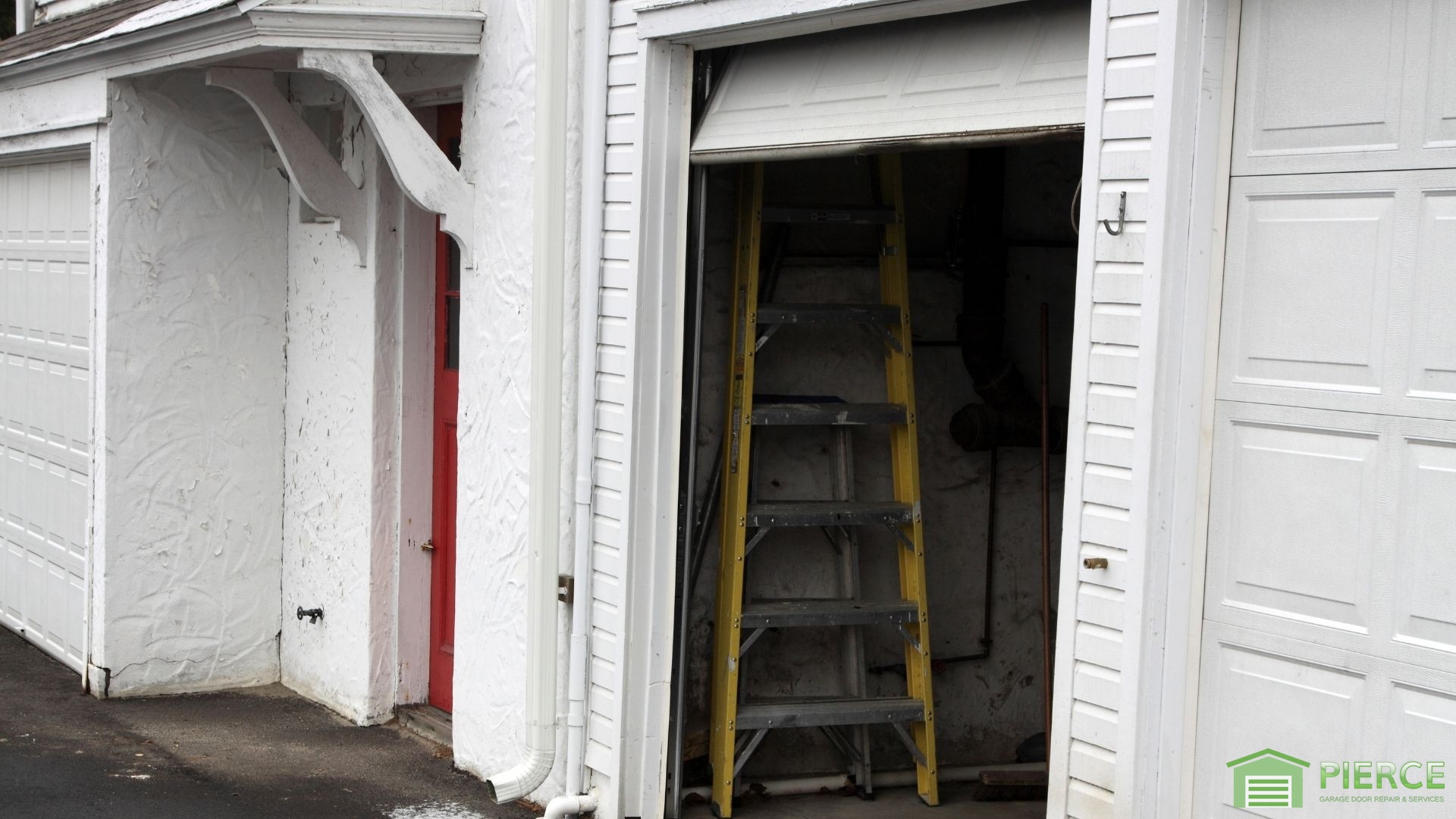
When a cable breaks, your door usually tilts or hangs crooked, with one side higher than the other. This uneven appearance is the signature sign of cable failure. In our wet Pacific Northwest climate, I’ve noticed that rust and corrosion can weaken cables over time, leading to unexpected failures during Puyallup’s rainy seasons, which is why having An Emergency Repair Guide For Pierce County Homes can be invaluable.
Understanding the Sounds Each Problem Makes
Spring breaks often announce themselves with a loud bang that sounds like a firecracker or gunshot. Many Pierce County homeowners have told me they thought someone was breaking into their home when their spring snapped in the middle of the night.
Cable failures are usually quieter. You might hear a snapping sound or notice unusual scraping as the door moves unevenly on its tracks. Sometimes there’s no sound at all, and you only discover the problem when you try to operate the door.
Why These Components Fail and When to Expect Problems
Springs have a finite lifespan measured in cycles, with most lasting between 10,000 and 15,000 open-close cycles. For average households in Lakewood or University Place, this translates to roughly 7 to 10 years of service. Temperature fluctuations can accelerate wear, which is why I see more spring failures during our occasional cold snaps.
Cables typically last longer than springs but can fail prematurely due to rust, fraying, or damage from the door going off track. I’ve replaced countless cables in Gig Harbor and Bonney Lake homes where moisture infiltration caused premature corrosion, and Choosing The Right Material For Your Garage Door can help prevent these weather-related issues.
Safety Concerns You Need to Know
Both broken springs and cables create serious safety hazards. A door with a broken spring can come crashing down unexpectedly, potentially causing injury or property damage. I always tell homeowners to never stand or walk under a garage door with a suspected spring problem.
Broken cables allow the door to fall on one side, creating pinch points and the risk of the door jumping off its tracks entirely. This is especially dangerous if the door is partially open when the cable snaps.
Can You Operate Your Door With Either Problem?
My answer is always the same: don’t try. Operating a garage door with broken springs or cables can cause additional damage to other components, including your opener, tracks, and rollers. What starts as a $200 repair can quickly become a $800 problem if you force the door to operate.
I’ve seen well-meaning homeowners in Spanaway and DuPont attempt to use their doors despite visible damage, only to bend tracks or burn out their opener motors. The inconvenience of keeping your door closed is far less costly than the cascading failures that result from continued use.
Trust the Experts at Pierce Garage Door Repair & Services
Whether you’re dealing with broken springs or broken cables in your Pierce County home, our team at Pierce Garage Door Repair & Services has the experience and tools to diagnose and repair the problem safely. We carry high-quality replacement parts and can typically complete repairs the same day.
Don’t risk injury or further damage by attempting these repairs yourself. Contact Pierce Garage Door Repair & Services today, and we’ll get your door working safely again.